215.538.7050
 Quakertown, PA



A weight workout for seniors is a safe and effective way to maintain strength, mobility, and independence as you age. At Franklin Court, residents benefit from structured routines and supportive environments that make exercise approachable and enjoyable. This guide explains how to start weight training at home for seniors, which exercises work best, and how to stay consistent. You will also learn how simple routines can support long-term health.
What Is a Weight Workout for Seniors?
A weight workout for seniors focuses on low-impact strength exercises using light weights or resistance. It includes movements that improve balance, flexibility, and muscle strength. These routines can be done at home or in guided fitness classes for safe and effective results.
Why Strength Training Is Important for Seniors
Strength training is one of the most important forms of exercise for older adults. According to the Centers for Disease Control and Prevention, adults aged 65 and older should engage in muscle-strengthening activities at least 2 days per week to maintain health and independence.
A consistent full-body weight workout for seniors can help improve balance, maintain muscle strength, and support daily movement. It can also help regulate stress hormones, as exercise lowers cortisol levels and improves overall well-being.
Additional guidance from the National Institute on Aging highlights that regular strength training supports better mobility, reduces fall risk, and helps seniors stay independent longer.
Best Weight Workout for Seniors to Get Started
The best weight workout for seniors is simple, controlled, and adaptable to different ability levels. Whether you are new to exercise or returning after a break, starting slow is key.
Here is a simple routine you can follow:
| Exercise | Focus Area | Suggested Reps |
| Seated bicep curls | Arms | 10–15 reps |
| Chair squats | Legs | 8–12 reps |
| Shoulder presses | Upper body | 8–10 reps |
| Heel raises | Balance and calves | 10–15 reps |
This routine can be completed as a 20-minute strength-training session for seniors and beginners. For those with limited time, even a 10-minute weight-training routine for seniors can provide benefits when done consistently.
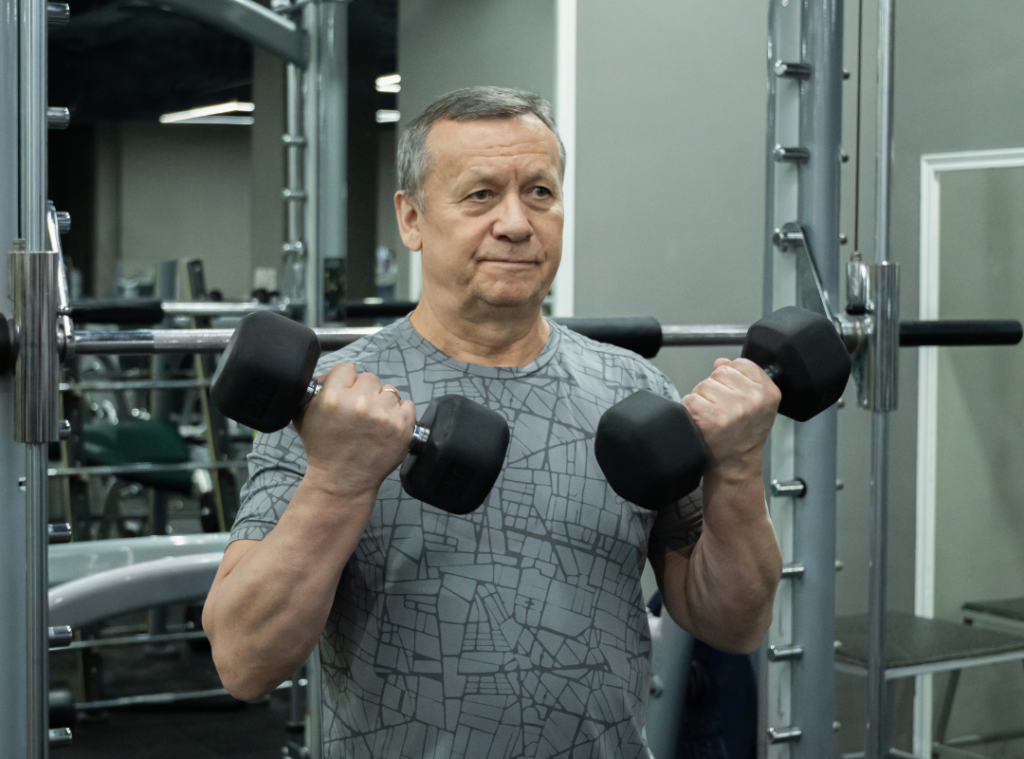
Weight Training for Seniors at Home
Many older adults prefer at-home weight training for seniors because it is convenient and comfortable. A few light dumbbells, or even household items, can be enough to get started.
A weight workout for seniors at home should focus on safety and consistency. Starting with light resistance and progressing gradually can help prevent strain or injury. For those exploring a free weight workout for seniors, maintaining proper form is more important than lifting heavier weights.
Dumbbell Workout for Seniors Over 70
A dumbbell workout for seniors over 70 should prioritize joint safety and balance. Exercises can be done seated or standing with support as needed.
Simple movements like bicep curls, shoulder presses, and light rows can be combined into a full-body weight workout for seniors. These exercises support daily strength without placing unnecessary stress on the body.
Staying Active Near Franklin Court
If you are searching for a weight workout for seniors near you in Pennsylvania, Franklin Court offers a welcoming environment that supports an active lifestyle. Residents can participate in fitness classes for mobility, balance, flexibility, and strength, helping them stay consistent and engaged.
The community also offers opportunities for connection through book clubs, trivia nights, and educational speakers. Learn more about daily life by visiting the community home page or exploring additional insights on the community blog.
Life at Franklin Court
Franklin Court provides Personal Care services designed to support independence while offering assistance when needed. Residents benefit from access to fitness classes focused on mobility, balance, flexibility, and strength, as well as community areas for socializing and opportunities for self-reflection and improvement.
Support services include dining, weekly housekeeping and laundry, community upkeep and cleaning, transportation assistance for medical appointments, and access to an on-site salon and barber to maintain a clean appearance.
Learn more about care options on the levels of care page or explore available features on the amenities page.
Build Strength and Confidence at Franklin Court
Starting a weight workout for seniors can feel overwhelming, but the right support makes all the difference. At Franklin Court, residents are encouraged to stay active through guided programs and a welcoming community.
Schedule a tour to experience the community firsthand and see how fitness and daily activities are thoughtfully integrated into everyday life.
Call us to learn more about how we support safe and effective exercise routines.
Contact us today to discover a place where health, comfort, and connection come together.
Frequently Asked Questions
What is the best weight-lifting routine for seniors?
The best routine includes simple, low-impact exercises that target major muscle groups. A combination of arm, leg, and core exercises performed 2–3 times per week is ideal. It should include proper rest and gradual progression. Consistency is more important than intensity.
How does exercise reduce cortisol?
Exercise helps regulate the body’s stress response by lowering cortisol levels over time. Physical activity promotes the release of endorphins, which improve mood and relaxation. Regular movement can also improve sleep, which further supports hormone balance. Even light strength training can have positive effects.
What is the 3-3-3 rule for weight lifting?
The 3-3-3 rule typically refers to performing 3 sets of 3 exercises for 3 rounds. This approach helps structure workouts and ensures balanced training. It can be adapted for seniors by using lighter weights and fewer repetitions. The goal is to maintain consistency without overexertion.
How should a 70-year-old lift weights?
A 70-year-old should start with light weights and focus on proper form. Exercises should be slow and controlled, with attention to balance and safety. It is important to rest between sets and avoid pushing too hard. Guided programs or supervised sessions can provide additional support.